That's pretty cool seeing OS 7 on a G4... cool to see people pulling things apart and learning how it all works (which IMO is 99% of the fun) 😃
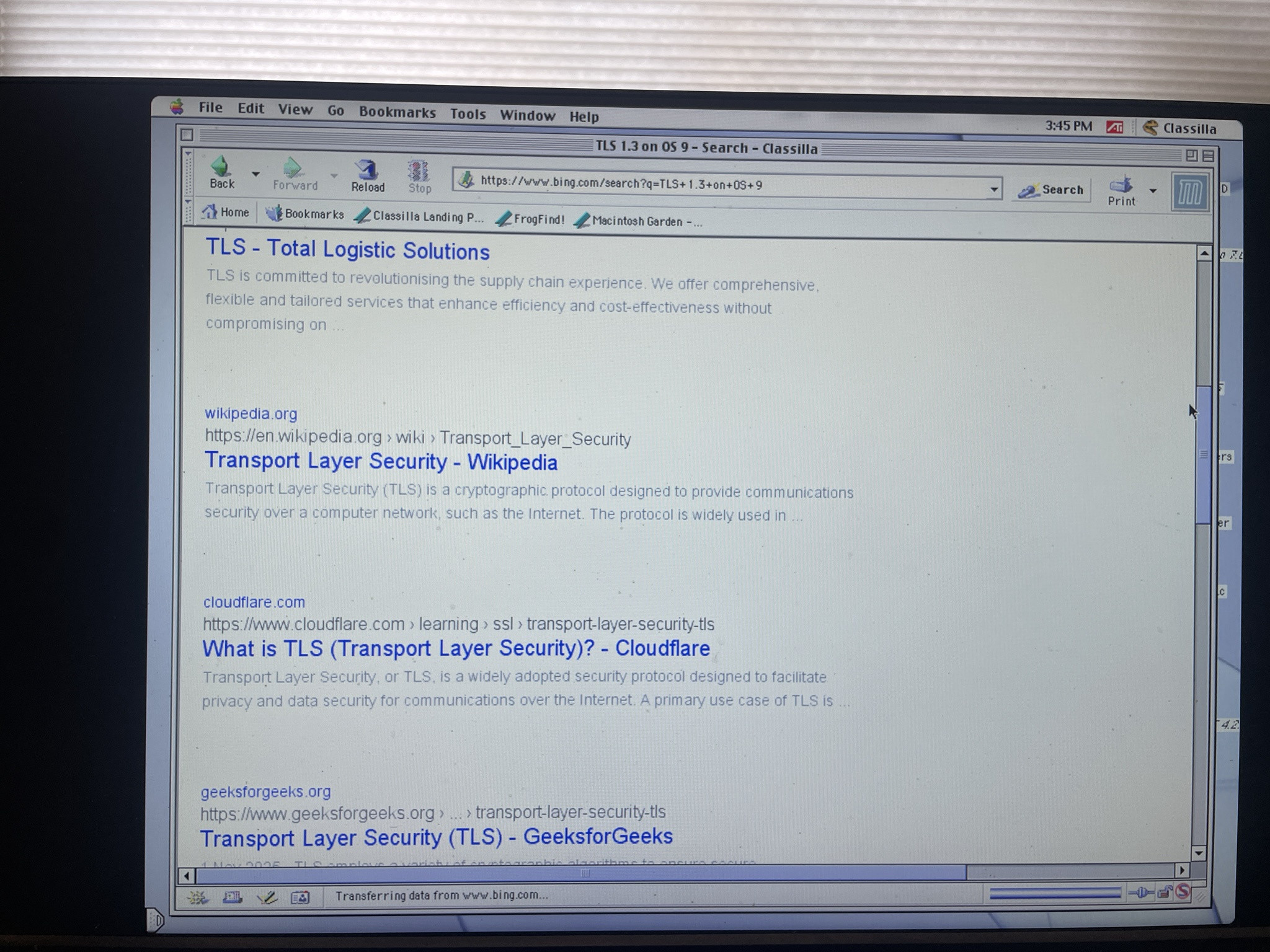
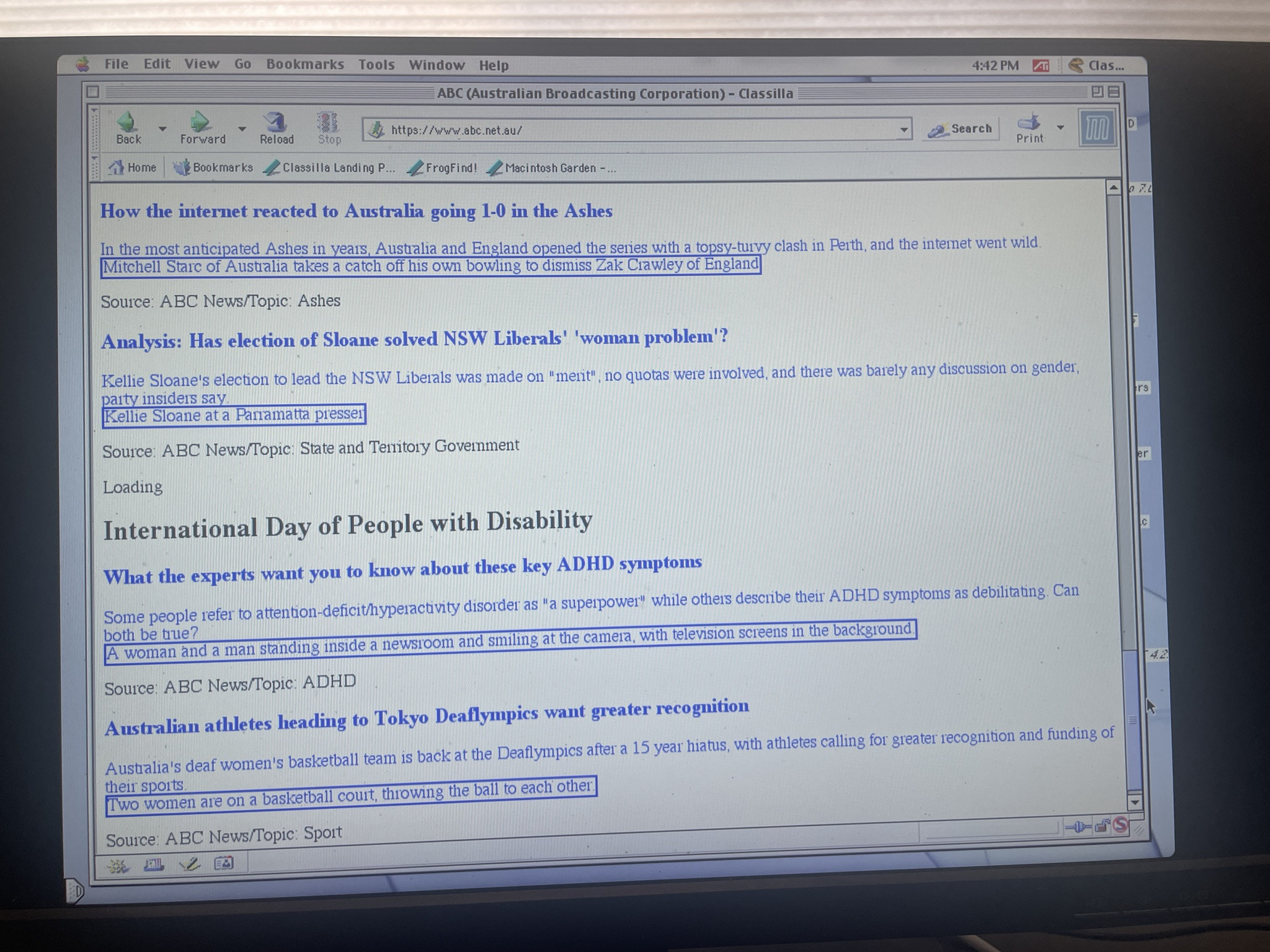
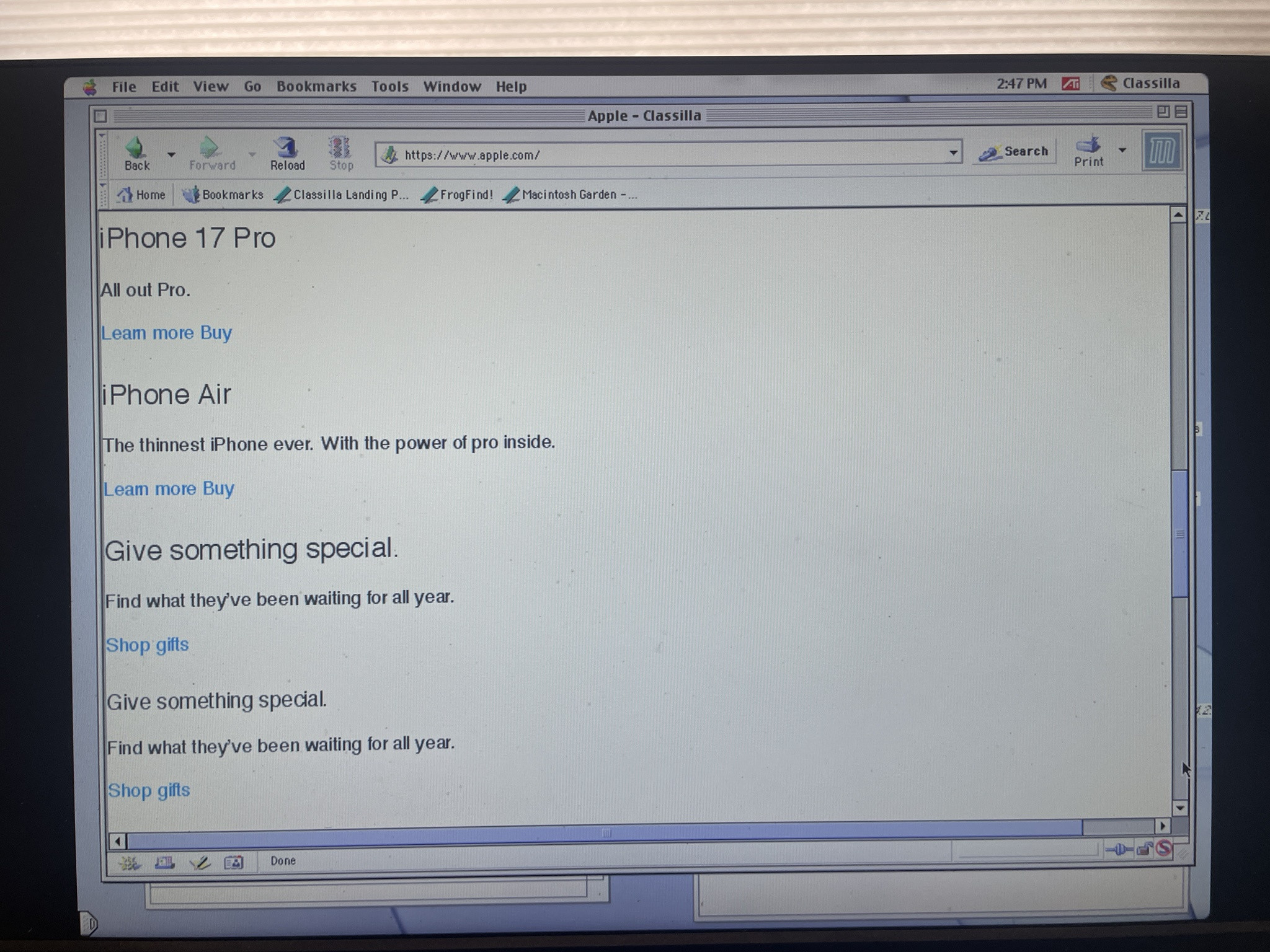
To be clear, my tool's advantage over what you've linked to (which is 'Crypto Ancienne') is that the said tool requires installing a VM called Machten, which runs X11 on top of OS9 and then compiling a UNIX build of 'Crypto Ancienne'. Not invalidating this process but it's a UNIX app running within a VM and TLS alone doesn't give Classilla a modern internet experience as it uses HTML 3/4 and a heavily dated version of javascript.
My TLS proxy is a native MacOS 8/9 app that uses OpenTransport and a Mac UI. Some compromises were made in order to get this working natively, but it means you get a native app. This has also enabled me to (for example) hack the HTTPS stream for things like readability.
The web browser is not as 'advanced' as Classilla (which is a port of a dated version of Mozilla) but it's my own hand-rolled browser. Why do this? My thinking was that trying to port over HTML5, CSS and a modern Javascript engine was a MAMMOTH task. Also my experience with OT is that it's designed for simpler transactions than what modern protocols require. Getting my TLS proxy to work without a UNIX layer was... interesting.
Having a hand-rolled browser means that instead of focussing on HTML5 and Javascript, I could make a lightweight browser that converts HTML into plain text. In short my browser:
- Is 248kb right now (4300 lines of code) and I reckon there's still room for efficiencies
- Takes the HTML and strips the guts out of it using a series of heuristics
- Draws the text, 'hyperlinks' and images onto your browser window using Quickdraw/Quicktime/text in a lightweight, scrollable manner (to the best of my knowledge this all had to be done by hand for OS 9 web browsers)
- Can do things like increase the font size. I may also add things like colour themes (dark mode maybe?) and website specific hacks if there's sites that donn't look great
- Jigs DDG's search functionality to work as the default search engine (when you enter text into the address bar). Most modern search engines require JS and weird URLs for tracking/redirection so aside from FrogFind I found this the most viable solution.
Should be ready to release in time for Christmas 😉